
NEW: Training and Supervision in Acceptance & Commitment Therapy (ACT)
Looking for a tailored course in Acceptance & Commitment Therapy to meet your individual or group needs, either online or face-to-face? Whether you’re wanting to learn the basic ACT approach or perhaps to deepen your understanding of the model, I can offer a training experience tailored to suit your needs.
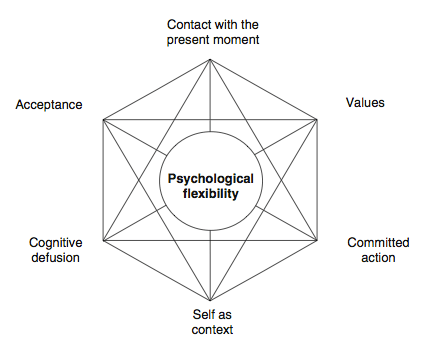
My approach is very much to contextualise the idea of ‘acceptance’ and of ‘psychological flexibility’ within the cognitive-behavioural tradition whilst emphasising how and where ACT departs from some of the core assumptions of this tradition. ACT is not CBT with metaphors!
I have trained and supervised NHS colleagues in the model since 2014, both in specialist psychology services and through IAPT. I have also taught ACT within Essex University to final year doctoral psychology students. My own teachers have included Steve Hayes, Jason Luoma, Robyn Walser, Benji Schoendorff and Joseph Rhinewine. For a decade or more, I have benefitted greatly from the generosity of the ACT community and am now myself a highly skilled practitioner.
I charge £90 per hour for supervision and 1:1 teaching, £60 for students. The cost of group teaching can be negotiated.
Acceptance and pain – an introduction to the psychological management of chronic pain and ill health
An overview of an acceptance-based approach to pain management for psychological therapists and others. The particular focus of this one day course is on helping therapists to cultivate an attitude of willingness in themselves in order that they are more able to embody this in the therapeutic space with their patients. The course involves the extensive use of roleplay and personal reflection as well as a theoretical overview of acceptance and commitment therapy.

Acceptance & Commitment Therapy (ACT) and Physiotherapy – working with chronic pain
As a physiotherapist, you’ll know that people in pain often adopt unworkable strategies for staying safe that meet short-term needs but which often don’t work in the longer term. The result is often greater pain sensitivity, heightened anxiety, worsening mood, increased isolation and social withdrawal, the loss of role, loss of hope and a life stretched between the boom and bust of over-exertion and collapse. This two day course will help physiotherapists and anyone else working with complex pain patients to address aversive and fear-avoidant behaviours in a way that is both supportive and compassionate whilst promoting lasting change.
The course is sensitive to the realities of time allowed in busy clinics, of the frequency of sessions and to physiotherapists’ skills base as physical therapists.
Content:
1) ACT: an overview
2) Aversive and appetitive behaviours
3) ACT and physiotherapy: supporting flexibility
4) Eliciting patients’ ‘pain stories’
5) Overcoming patients’ unworkable strategies (and being honest about our own)
6) The role of metaphor: using language creatively
7) ‘Bargaining’ and other trapdoors
8) ‘What to do when..’
– patients just want to keep telling you what’s wrong
– patients just want to keep telling you you’re wrong
9) Change through compassion
10) Review and close
 Psychotherapist & Trainer